Indicator Signals
Momentum, trend, and oscillator signals that provide early warnings of potential reversals and continuations. Each signal is explained with identification rules, real chart examples, and common mistakes.
Technical indicators process raw price and volume data to generate signals that are not immediately visible on a bare candlestick chart. Unlike pure price patterns, indicator signals add a layer of quantitative context — measuring momentum, trend strength, and overbought or oversold conditions. The most powerful setups arise when an indicator signal aligns with a price pattern or a key support and resistance level, creating confluence that increases the probability of a meaningful move.
All Indicator Signals
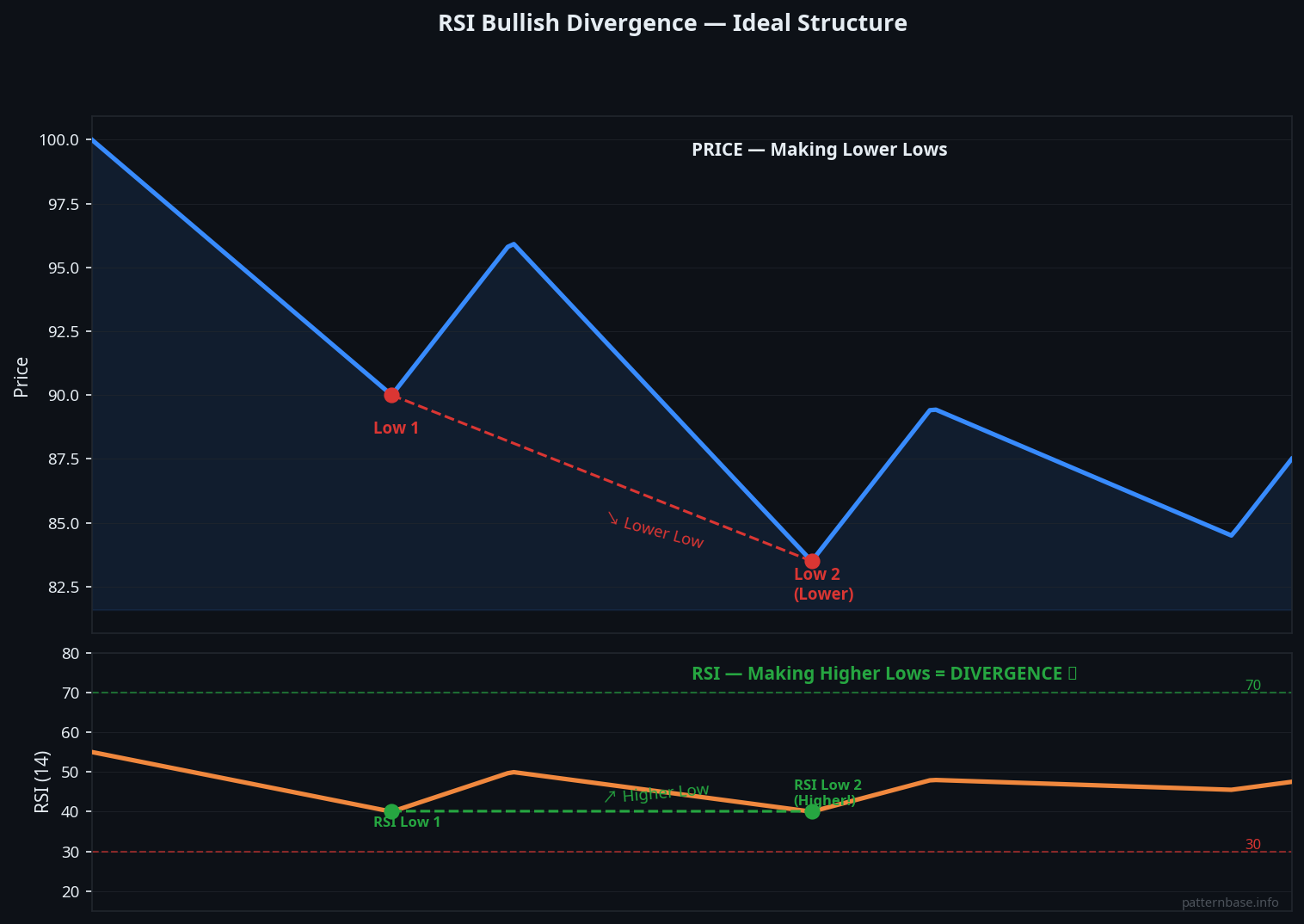
RSI Bullish Divergence
Price makes a lower low while RSI makes a higher low. A powerful early warning signal that selling momentum is weakening before a potential reversal.
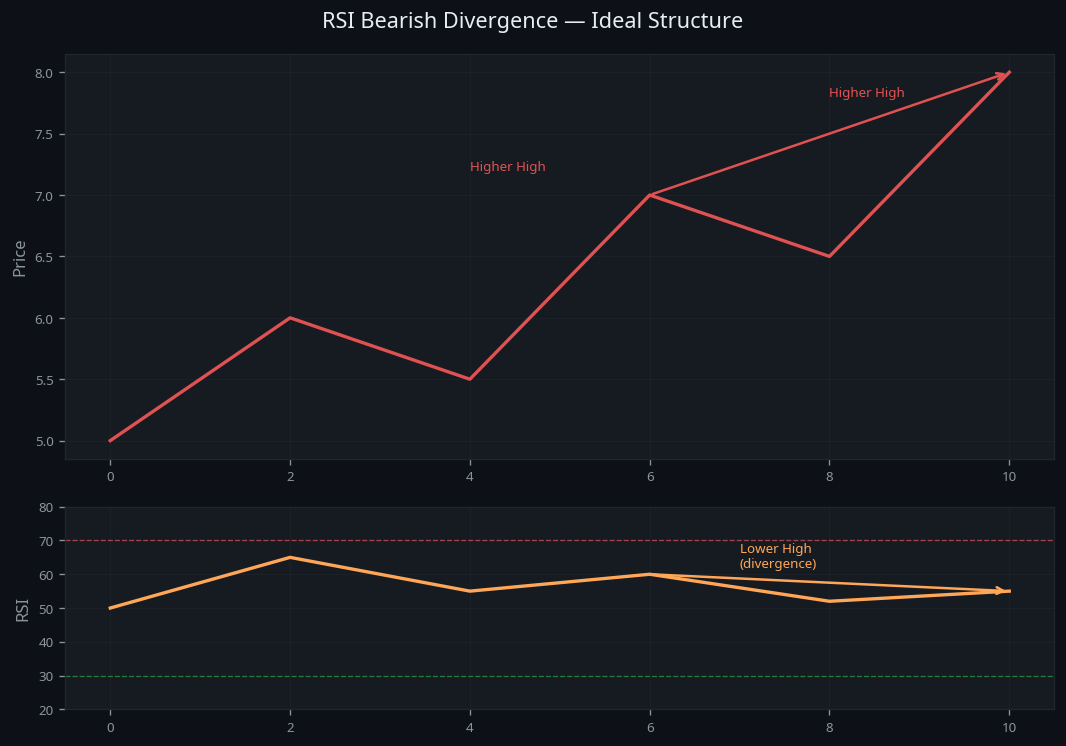
RSI Bearish Divergence
Price makes a higher high while RSI makes a lower high. Signals weakening upside momentum and a potential trend reversal.
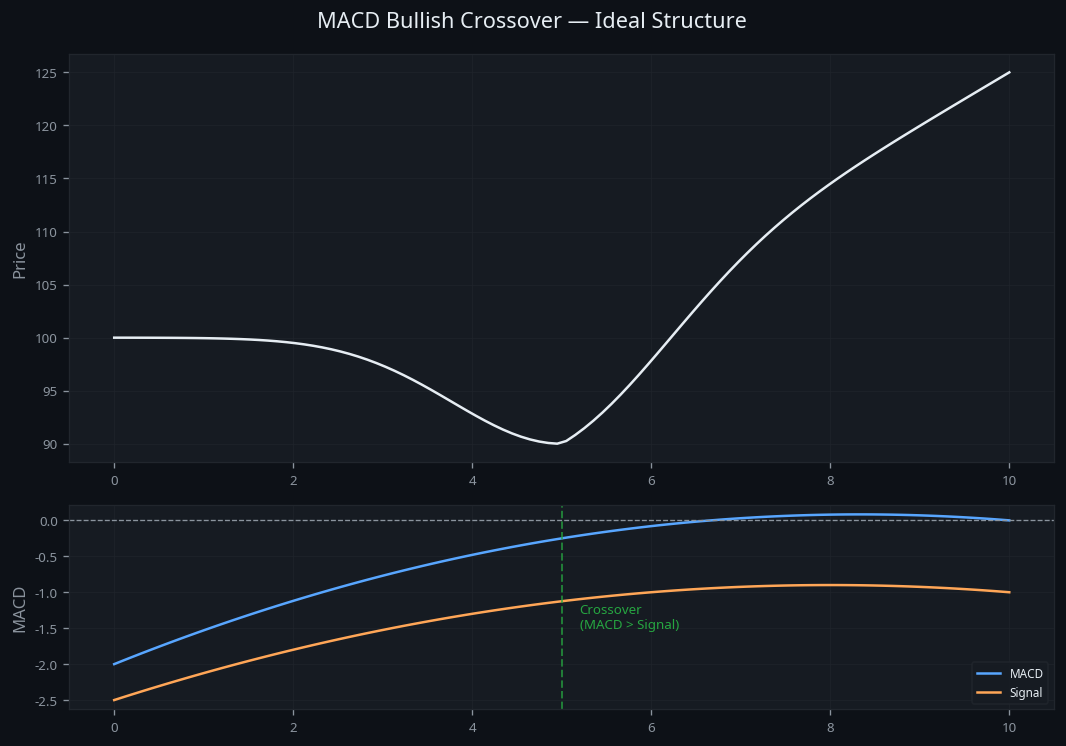
MACD Bullish Crossover
MACD line crosses above the Signal line, indicating that short-term momentum is accelerating above medium-term momentum.
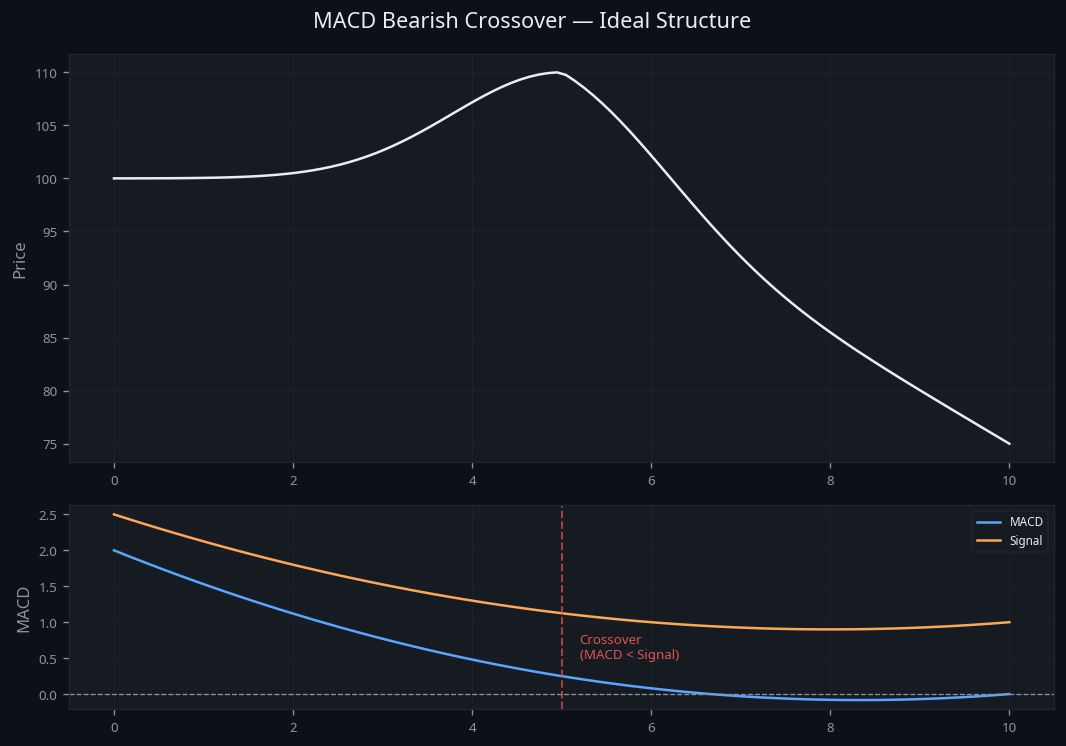
MACD Bearish Crossover
MACD line crosses below the Signal line, indicating that short-term momentum is decelerating below medium-term momentum.
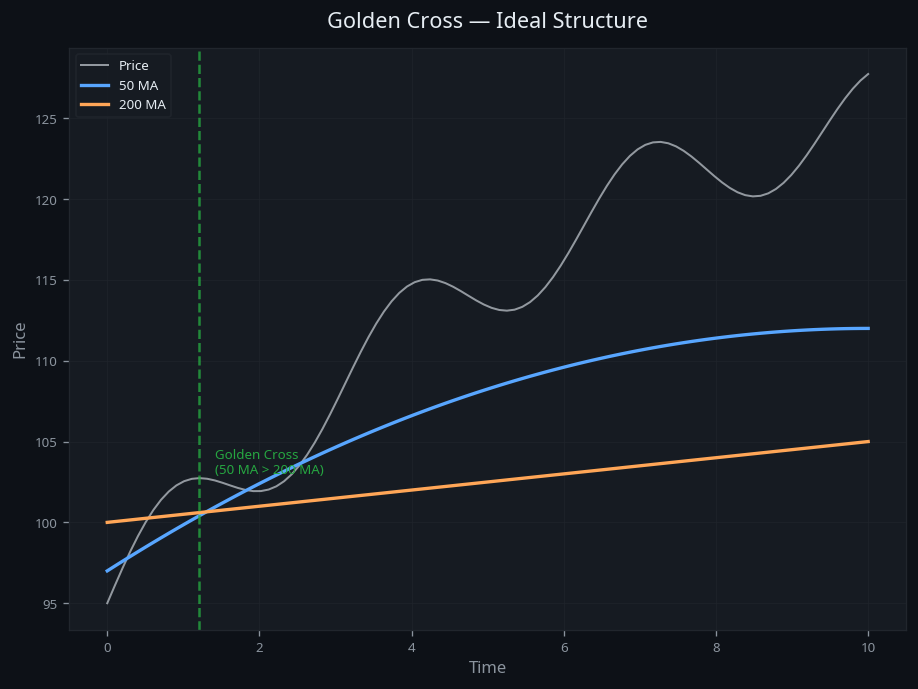
Golden Cross
The 50-period MA crosses above the 200-period MA. A major bullish signal indicating that short-term momentum has overtaken the long-term trend.
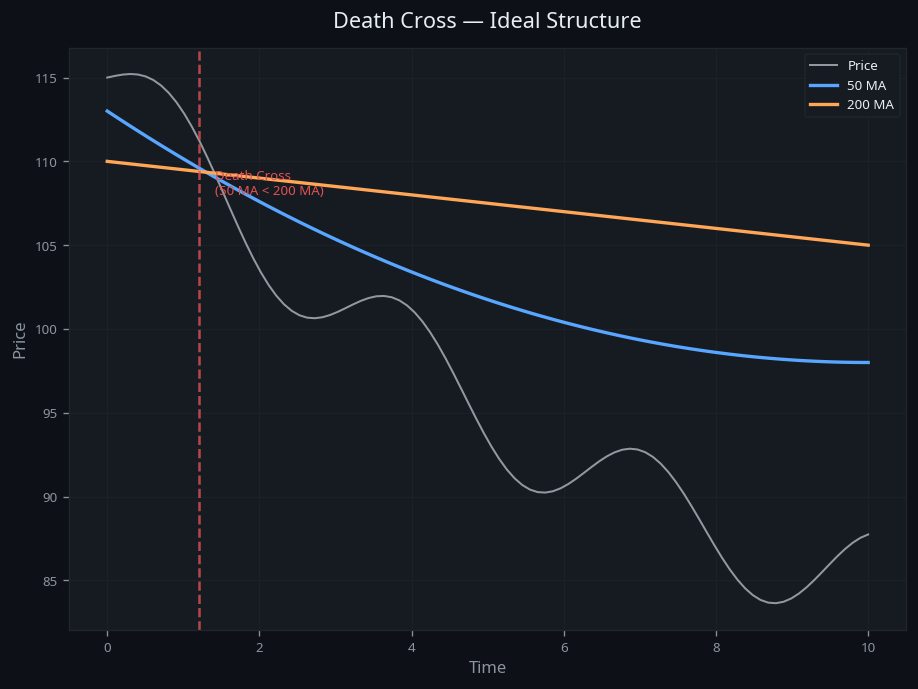
Death Cross
The 50-period MA crosses below the 200-period MA. A major bearish signal indicating that short-term momentum has fallen below the long-term trend.
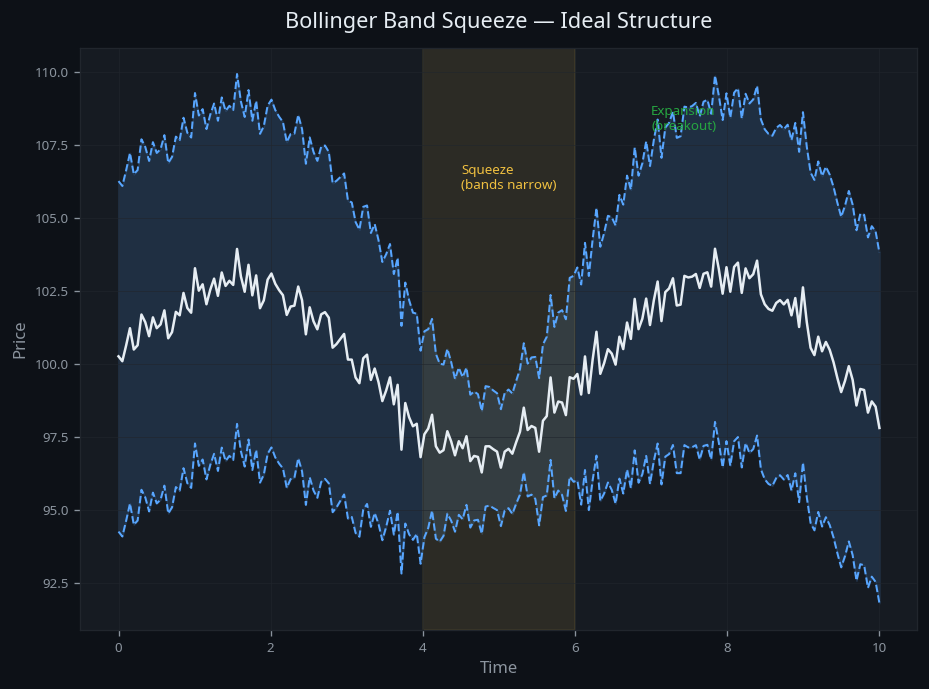
Bollinger Band Squeeze
Bollinger Bands narrow to a multi-month low in bandwidth, signalling that a major high-volatility price move is imminent.
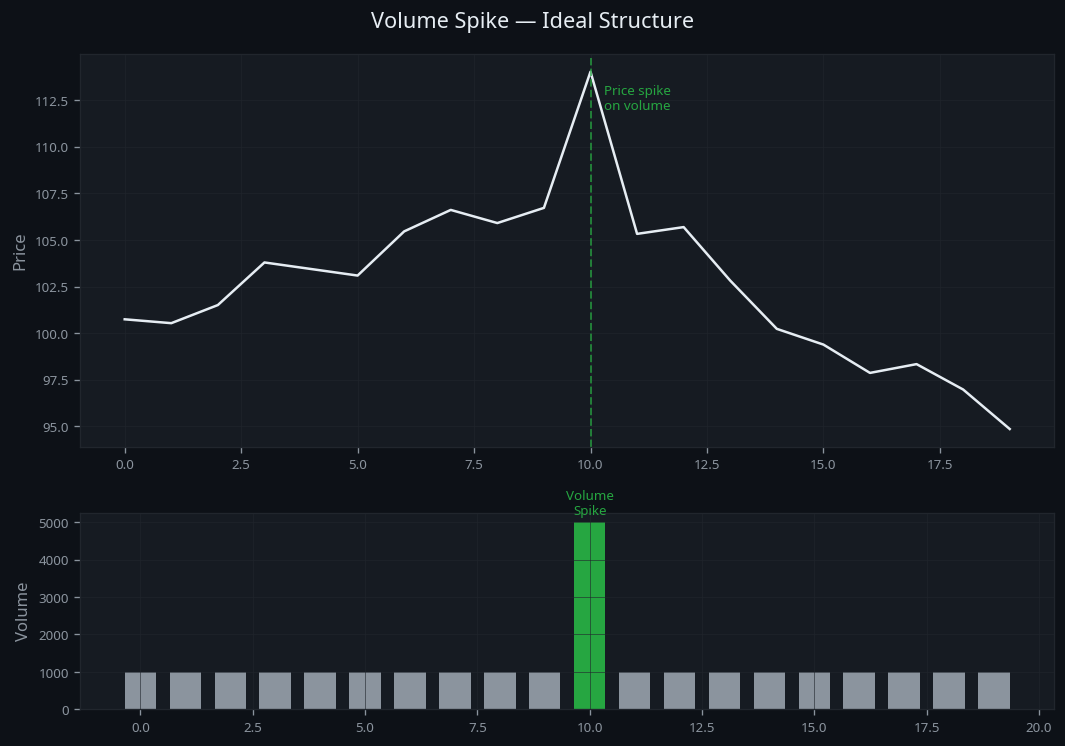
Volume Spike
Volume surges 2× or more above the 20-period average, confirming breakouts, reversals, and key price moves with increased conviction.
Library updated regularly
New visual guides are added regularly. Browse the current library above or check back for newly published indicator pages.